
"Costa Rica exports"
300 article(s) found

Introduction to the flavor and taste of fine coffee beans in the coffee producing area of Costa Rica's Goddess Manor.
Coffee is an important economic source of Costa Rica. It was introduced in 1808 and has been cultivated for 200 years. Costa Rica has 1x3 population engaged in industries related to coffee, Costa Rican coffee and coffee beans. Colombians say that coffee has changed the country and enjoyed a rich environment, and coffee has indeed made an outstanding contribution; although the land area of Costa Rica lags behind that of Central America and the United States.

Costa Rica Tara Beads Coffee Costa Rica Coffee Bean Flavors
Costa Rican coffee was introduced in 1729 by Cuba. Costa Rica now has one of the world's most sophisticated systems of government assistance in coffee farming. Although Costa Rica is the world's second largest banana exporter, coffee is the second most important crop in the country's agriculture. Coffee is clearly more beneficial than bananas... High in Costa Rica

Introduction of Flavor Flavor Coffee beans in Coffee Variety producing area of Saint Roman Manor, Costa Rica
Costa Rica is located in the Central American isthmus, belonging to North America, 10 north latitude, 84 west longitude. It is bordered by the Caribbean Sea to the east and the North Pacific Ocean to the west, with a coastline of 1290 km (212km on the east coast and 1016 km on the west coast). Costa Rica borders Nicaragua in the north (309 km long border) and Panama (639 km long border) south-southeast. Total

Costa Rican Yerzaro Coffee Flavor description, Grinding degree characteristics, Variety Taste producing area
Coffee was introduced into Costa Rica from Cuba in 1729. Today, its coffee industry is one of the well-organized industries in the world, with a yield of 1700 kg per hectare. Costa Rica has only 3.5 million people but 400m coffee trees, and coffee exports account for 25 per cent of the country's total exports. The volcanic soil of Costa Rica is very fertile and well drained, especially in the central part.
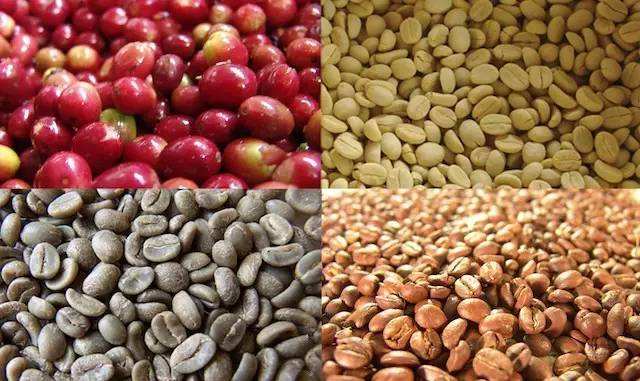
The reasons for the sharp decline in coffee production in Costa Rica
Kaibei (official Wechat account vdailycom) found that coffee exports from Costa Rica accounted for 25% of Costa Rica's total coffee exports. Costa Rica has also benefited from the establishment of the Central American Institute for Agricultural Research (TurrialbaoftheCentralAmericanAgriculturalResearchlnstitute, IAAC) in Tarasu, which is an important

Flavor description of Coffee beans in Saint Roman Manor, Costa Rica
Coffee was introduced into Costa Rica from Cuba in 1729. Today, its coffee industry is one of the well-organized industries in the world, with a yield of 1700 kg per hectare. Costa Rica has only 3.5 million people but 400m coffee trees, and coffee exports account for 25 per cent of the country's total exports. The volcanic soil of Costa Rica is very fertile and well drained, especially in the central part.

A brief introduction to the description of the flavor, taste and aroma characteristics of Costa Rica Tarazhu boutique coffee beans
Coffee was introduced into Costa Rica from Cuba in 1729. Today, its coffee industry is one of the well-organized industries in the world, with a yield of 1700 kg per hectare. Costa Rica has only 3.5 million people but 400m coffee trees, and coffee exports account for 25 per cent of the country's total exports. The volcanic soil of Costa Rica is very fertile and well drained, especially in the central part.

Introduction to fine coffee with light and pure flavor and taste of Chateau Saint-Roman, Costa Rica
Tarrazu in Costa Rica is one of the major coffee producing areas in the world. The coffee produced is light and pure in flavor and pleasant in aroma. Costa Rica, with its fertile volcanic soil and good drainage, is the first country in Central America to grow coffee and bananas for commercial value. Coffee and bananas are the country's main exports. In 1729, coffee was introduced from Cuba to Goth.

San Román Costa Rica, Costa Rica
Other types of Brazilian coffee, such as Rio, Parana, etc., can be produced in large quantities without too much care. Although the taste is rough, it is a kind of inexpensive coffee. Because it is distributed all over the country, the solid quality varies, and there are its own standards (NO.2~NO.8 according to the amount of impurities, NO.13~NO.19 according to the size of beans, divided into six grades according to taste).

A brief introduction to the planting market price of high acidity Tarazhu boutique coffee beans in Costa Rica
There are many kinds of coffee here, but its industrial policy is large and cheap, so there is not much premium coffee, but it is a good choice for mixing other coffees. One of the most famous is Mountain Costa Rica Coffee, which tastes mellow and neutral. It can be boiled directly or mixed with other kinds of coffee beans to form a mixed coffee. It is also a good choice. Other kinds of Brazil

The mild taste of Costa Rica Yerzaro boutique coffee beans cultivation geographical location climate sea
Tarrazu in Costa Rica is one of the major coffee producing areas in the world. The coffee produced is light and pure in flavor and pleasant in aroma. The research center, located about 30 kilometers northeast of San Jose, the capital of Costa Rica, belongs to the Costa Rican Coffee Association and is a research institution for villa sarchi planting, breeding and quality inspection newly developed in Costa Rica.

An introduction to the flavor and taste characteristics of the coffee producing area of Costa Rica's Saint Roman Coffee Manor.
Costa Rica is located in the Central American isthmus, belonging to North America, 10 north latitude, 84 west longitude. It is bordered by the Caribbean Sea to the east and the North Pacific Ocean to the west, with a coastline of 1290 km (212km on the east coast and 1016 km on the west coast). Costa Rica borders Nicaragua in the north (309 km long border) and Panama (639 km long border) south-southeast. Total

Fine Coffee introduced in the Coffee production area in the Central Mountain area of Costa Rica
Coffee was introduced into Costa Rica from Cuba in 1729. Today, its coffee industry is one of the well-organized industries in the world, with a yield of 1700 kg per hectare. Costa Rica has only 3.5 million people but 400m coffee trees, and coffee exports account for 25 per cent of the country's total exports. The volcanic soil of Costa Rica is very fertile and well drained, especially in the central part.

Introduction of boutique coffee beans in coffee flavor and taste areas of Chateau Saint Roman, Costa Rica
1502 C. Columbus discovered the coast of Costa Rica on his fourth voyage. Since then, the Spanish colonists have invaded many times. The city of Catago was founded in 1563 and Costa Rica was colonized by Spain and placed under the jurisdiction of the Governor's Office of Guatemala. During the colonial period, under the cruel enslavement and oppression of the Spanish colonists, the Indians were almost wiped out and there was little labor available for enslavement.

Introduction to the grindability of fine coffee beans in the flavor description of Saint Roman Manor, Costa Rica
Coffee is an important economic source of Costa Rica. It was introduced in 1808 and has been cultivated for 200 years. Costa Rica has 1x3 population engaged in industries related to coffee, Costa Rican coffee and coffee beans. Colombians say that coffee has changed the country and enjoyed a rich environment, and coffee has indeed made an outstanding contribution; although the land area of Costa Rica lags behind that of Central America and the United States.

Unique strong Coffee Grinding scale Flavor description method in Saint Roman Manor, Costa Rica
Coffee was introduced into Costa Rica from Cuba in 1729. Today, its coffee industry is one of the well-organized industries in the world, with a yield of 1700 kg per hectare. Costa Rica has only 3.5 million people but 400m coffee trees, and coffee exports account for 25 per cent of the country's total exports. The volcanic soil of Costa Rica is very fertile and well drained, especially in the central part.

Taste mellow, neutral Costa Rican coffee flavor, characteristics, taste and manor
Costa Rican coffee is produced in the Republic of Costa Rica (The Republic of Costa Rica) in the south of Central America. Its quality is similar to that of Colombian coffee and is suitable for blending mixed coffee. The coffee beans produced at the high latitudes of Costa Rica are famous in the world, full-bodied, mild in taste, but extremely sour.

Taste mellow neutral Costa Rican coffee flavor, characteristics, taste and manor
Costa Rican coffee is produced in the Republic of Costa Rica (The Republic of Costa Rica) in the south of Central America. Its quality is similar to that of Colombian coffee and is suitable for blending mixed coffee. The coffee beans produced at the high latitudes of Costa Rica are famous in the world, full-bodied, mild in taste, but extremely sour.

Mellow, neutral taste Costa Rican coffee flavor, characteristics, taste and manor
Costa Rican coffee is produced in the Republic of Costa Rica (The Republic of Costa Rica) in the south of Central America. Its quality is similar to that of Colombian coffee and is suitable for blending mixed coffee. The coffee beans produced at the high latitudes of Costa Rica are famous in the world, full-bodied, mild in taste, but extremely sour.